Sabrina Staniewska

Case Study Huge Things

Three years teaching startup founders to validate ruthlessly before they build.
Product detail
  • What

    Acceleration

    Role

    Start up Coach/Tutor

  • Participants

    3–5 teams per cohort

    Sector

    Fintech, SaaS, Medtech

Strategic Impact

Three years coaching early-stage startups through the hardest question in product development: are you solving a problem worth solving, for a market you can actually reach?

  • About Huge Things

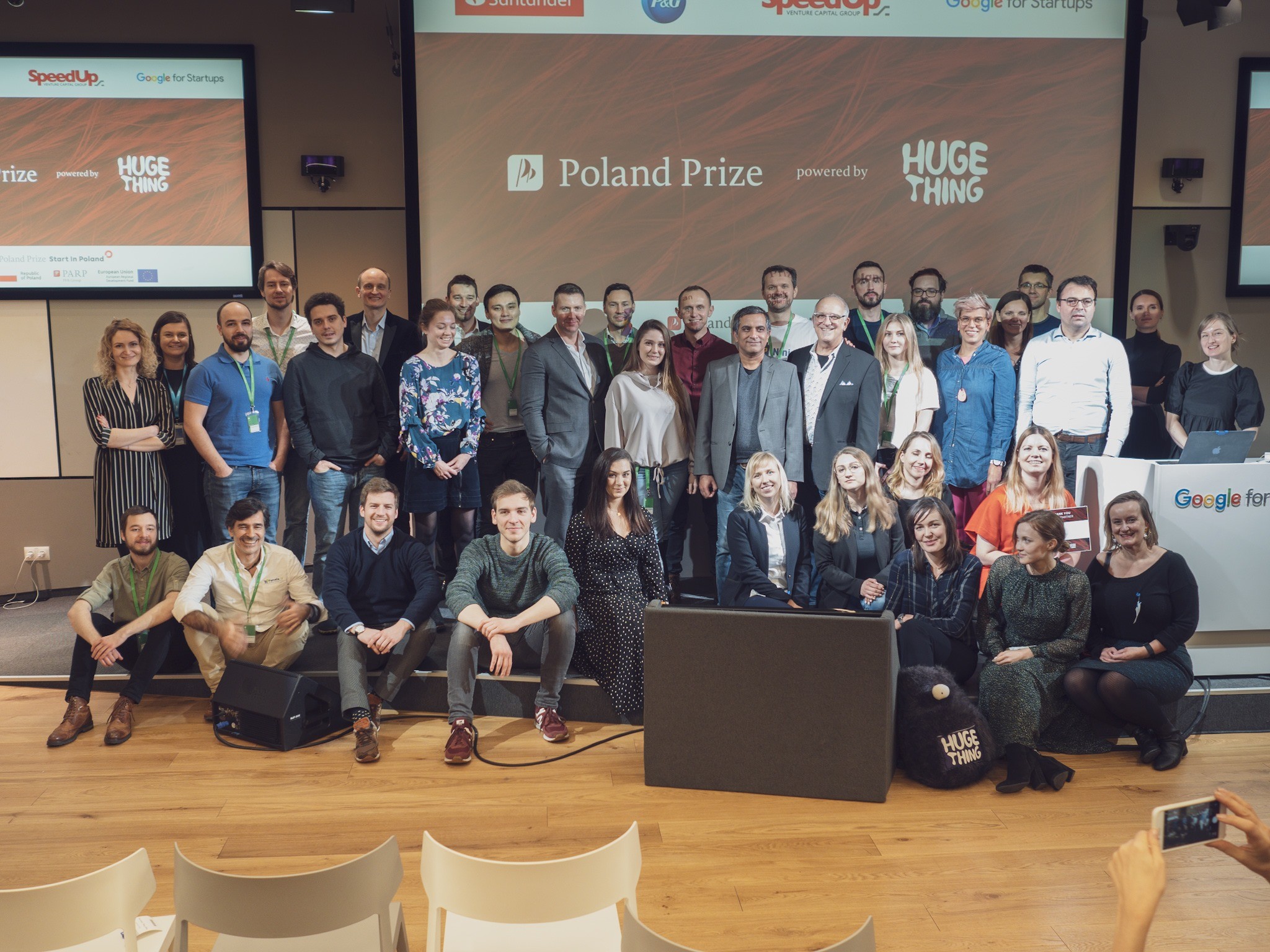
    Huge Thing is a Poznań-based accelerator running its programmes at Google for Startups Campus Warsaw — every edition operates under that partnership. I joined as a tutor and consultant coach for four consecutive editions between 2016 and 2019, working with early-stage teams navigating the ambiguous space between idea and traction. Individual editions also carried corporate partners — Alior Bank was one — who contributed mentors, budgeting sessions, and sector-specific input alongside the core Google for Startups programme structure.

    My remit was product-market fit — helping founders validate whether they were solving a real problem for a reachable market before burning resources on the wrong solution. This wasn't mentorship as encouragement. It was structured, evidence-based coaching on how to test assumptions, run customer development, and read the signals that tell you whether to pivot or persevere.

  • How it worked

    The teams had milestone-based funding — they needed to demonstrate progress against specific validation criteria to unlock the next tranche. My reporting wasn't just qualitative feedback; it was an assessment of whether teams were building the evidence required to justify continued investment. This created real accountability on both sides: founders had to show, not tell, and I had to be rigorous about what constituted real validation versus optimistic interpretation.

    Most teams arrive thinking they need to build faster. The real work is teaching them to validate smarter.

    I ran structured coaching sessions on customer development — how to design interviews that test hypotheses rather than seek validation. How to recognize when qualitative signals indicate a real problem versus a polite conversation. How to translate research insights into product decisions without losing rigour.

    The most valuable moments weren't in workshops. They were in one-on-one sessions when a founder realized their target customer didn't actually have the problem they were solving, or that the market they'd assumed existed was too fragmented to reach. Those reframes — painful, necessary — were where real product-market fit work happened.


The best coaching outcomes weren't the teams that scaled fastest. They were the ones that learned to validate ruthlessly — and saved months by not building what the market didn't need.

Where I Added Value

  • Explain the idea

    Teaching founders how to test assumptions before building. Evidence-based decision making, not gut feeling.

  • Customer development methodology

    Structured interview frameworks. How to ask questions that reveal truth rather than confirm what you want to hear.

  • Pivot or persevere decisions

    Reading the signals. When to double down, when to reframe, when to walk away. The most valuable coaching conversations happened here.

  • Pivot or persevere decisions

    Turning qualitative insights into product priorities. The gap most early-stage teams struggle with.

Sabrina Staniewska

Sabrina Staniewska

Case Study Huge Things

Three years teaching startup founders to validate ruthlessly before they build.

Product detail
  • What

    Acceleration

    Role

    Start up Coach/Tutor

  • Participants

    3–5 teams per cohort

    Sector

    Fintech, SaaS, Medtech

Strategic Impact

Three years coaching early-stage startups through the hardest question in product development: are you solving a problem worth solving, for a market you can actually reach?

  • About Huge Things

    Huge Thing is a Poznań-based accelerator running its programmes at Google for Startups Campus Warsaw — every edition operates under that partnership. I joined as a tutor and consultant coach for four consecutive editions between 2016 and 2019, working with early-stage teams navigating the ambiguous space between idea and traction. Individual editions also carried corporate partners — Alior Bank was one — who contributed mentors, budgeting sessions, and sector-specific input alongside the core Google for Startups programme structure.

    My remit was product-market fit — helping founders validate whether they were solving a real problem for a reachable market before burning resources on the wrong solution. This wasn't mentorship as encouragement. It was structured, evidence-based coaching on how to test assumptions, run customer development, and read the signals that tell you whether to pivot or persevere.

  • How it worked

    The teams had milestone-based funding — they needed to demonstrate progress against specific validation criteria to unlock the next tranche. My reporting wasn't just qualitative feedback; it was an assessment of whether teams were building the evidence required to justify continued investment. This created real accountability on both sides: founders had to show, not tell, and I had to be rigorous about what constituted real validation versus optimistic interpretation.

    Most teams arrive thinking they need to build faster. The real work is teaching them to validate smarter.

    I ran structured coaching sessions on customer development — how to design interviews that test hypotheses rather than seek validation. How to recognize when qualitative signals indicate a real problem versus a polite conversation. How to translate research insights into product decisions without losing rigour.

    The most valuable moments weren't in workshops. They were in one-on-one sessions when a founder realized their target customer didn't actually have the problem they were solving, or that the market they'd assumed existed was too fragmented to reach. Those reframes — painful, necessary — were where real product-market fit work happened.

The best coaching outcomes weren't the teams that scaled fastest. They were the ones that learned to validate ruthlessly — and saved months by not building what the market didn't need.

Where I Added Value

  • Explain the idea

    Teaching founders how to test assumptions before building. Evidence-based decision making, not gut feeling.

  • Customer development methodology

    Structured interview frameworks. How to ask questions that reveal truth rather than confirm what you want to hear.

  • Pivot or persevere decisions

    Reading the signals. When to double down, when to reframe, when to walk away. The most valuable coaching conversations happened here.

  • Pivot or persevere decisions

    Turning qualitative insights into product priorities. The gap most early-stage teams struggle with.

See All

Next project -->

Sabrina Staniewska

Sabrina Staniewska

Case Study Huge Things

Three years teaching startup founders to validate ruthlessly before they build.

Product detail
  • What

    Acceleration

    Role

    Start up Coach/Tutor

  • Participants

    3–5 teams per cohort

    Sector

    Fintech, SaaS, Medtech

Strategic Impact

Three years coaching early-stage startups through the hardest question in product development: are you solving a problem worth solving, for a market you can actually reach?

  • About Huge Things

    Huge Thing is a Poznań-based accelerator running its programmes at Google for Startups Campus Warsaw — every edition operates under that partnership. I joined as a tutor and consultant coach for four consecutive editions between 2016 and 2019, working with early-stage teams navigating the ambiguous space between idea and traction. Individual editions also carried corporate partners — Alior Bank was one — who contributed mentors, budgeting sessions, and sector-specific input alongside the core Google for Startups programme structure.

    My remit was product-market fit — helping founders validate whether they were solving a real problem for a reachable market before burning resources on the wrong solution. This wasn't mentorship as encouragement. It was structured, evidence-based coaching on how to test assumptions, run customer development, and read the signals that tell you whether to pivot or persevere.

  • How it worked

    The teams had milestone-based funding — they needed to demonstrate progress against specific validation criteria to unlock the next tranche. My reporting wasn't just qualitative feedback; it was an assessment of whether teams were building the evidence required to justify continued investment. This created real accountability on both sides: founders had to show, not tell, and I had to be rigorous about what constituted real validation versus optimistic interpretation.

    Most teams arrive thinking they need to build faster. The real work is teaching them to validate smarter.

    I ran structured coaching sessions on customer development — how to design interviews that test hypotheses rather than seek validation. How to recognize when qualitative signals indicate a real problem versus a polite conversation. How to translate research insights into product decisions without losing rigour.

    The most valuable moments weren't in workshops. They were in one-on-one sessions when a founder realized their target customer didn't actually have the problem they were solving, or that the market they'd assumed existed was too fragmented to reach. Those reframes — painful, necessary — were where real product-market fit work happened.

The best coaching outcomes weren't the teams that scaled fastest. They were the ones that learned to validate ruthlessly — and saved months by not building what the market didn't need.

Where I Added Value

  • Product-market fit validation

    Teaching founders how to test assumptions before building. Evidence-based decision making, not gut feeling.

  • Customer development methodology

    Structured interview frameworks. How to ask questions that reveal truth rather than confirm what you want to hear.

  • Pivot or persevere decisions

    Reading the signals. When to double down, when to reframe, when to walk away. The most valuable coaching conversations happened here.

  • Research-to-roadmap translation

    Turning qualitative insights into product priorities. The gap most early-stage teams struggle with.

See All

Next project -->