Innovation & Leadership

Research & Development

Community & Coaching

Case Study ING accelerator

Embedded as Service Designer with one team inside ING's PACE incubator — validating a real B2B problem for one of Europe's largest banks.
  • What

    Service design, customer validation, coaching

  • Role

    Service Designer & Mentor

  • Participants

    team of 5

  • Company / Sector

    ING / Banking (B2B corporate)

Strategic Impact

PACE is focused on making ING Businesses innovate like a network of startups while leveraging the benefits Innovation is now listed as one of ING of an enterprise combining the best of both worlds

  • About PACE at ING

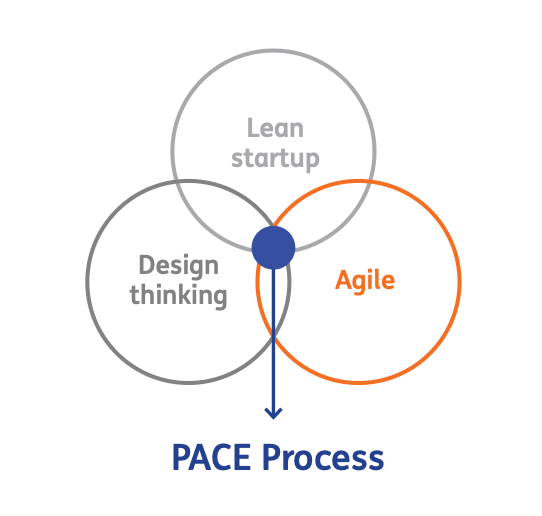
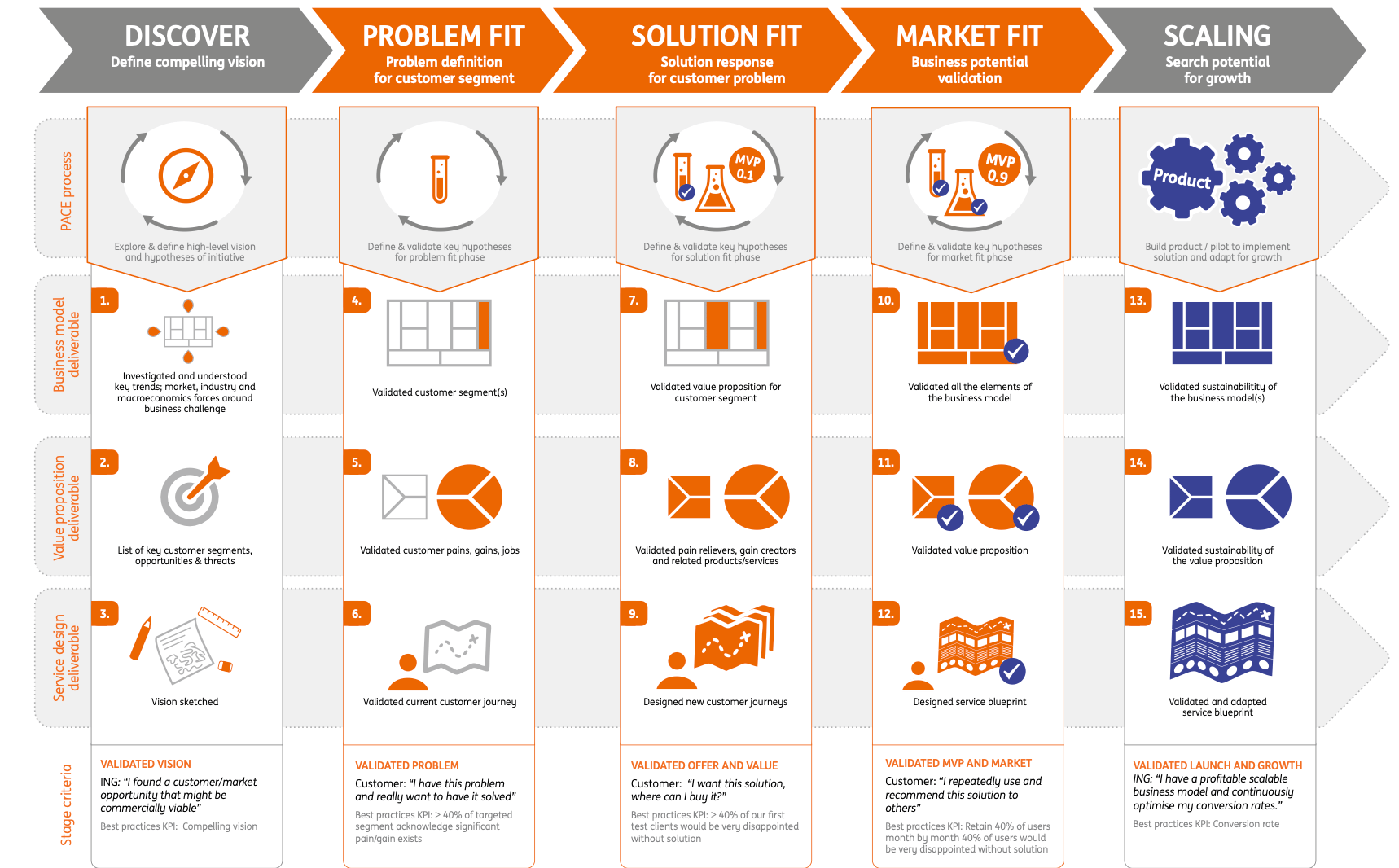
    PACE is ING's proprietary innovation methodology, combining Design Thinking, Lean Startup, and Agile into a single stage-gated process. Ideas move through five phases — Discover, Problem Fit, Solution Fit, Market Fit, Scaling — each with its own customer validation criteria before a team can advance. The discipline: kill ideas that don't clear the bar, fast, before they consume real budget.

  • Methodology

    The programme was built on Strategyzer methodology — Business Model Canvas, Value Proposition Canvas, and Testing Business Ideas — applied to an internal corporate context. Working closely with Strategyzer, the framework was adapted for Ringier's specific innovation culture and business context. The philosophy: ideas are cheap, evidence is everything. Teams that couldn't show genuine customer validation data didn't advance.
    What I covered
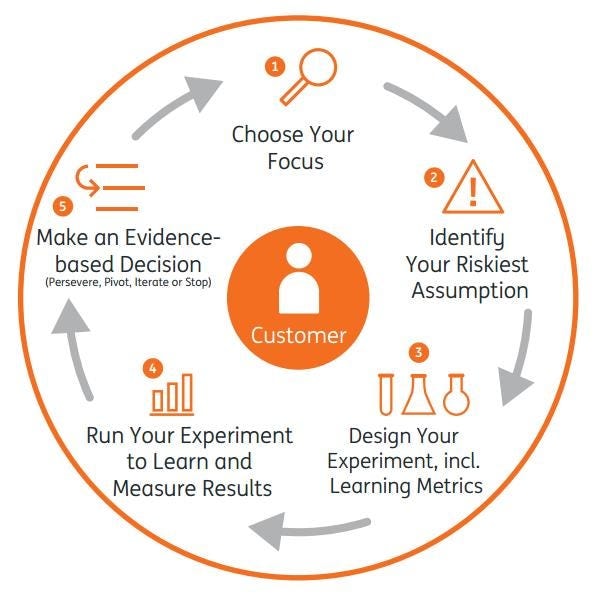
    • Designed the experiment plan for Problem Fit and Solution Fit — sequencing which riskiest hypotheses to test first, and how
    • Wrote the research questions for street-level customer interviews — validating that the problem was real and significant enough to act on (PACE's Problem Fit exit bar: "I have this problem and really want it solved")
    • Built a Facebook group and ran targeted ads as a low-fidelity solution test — validating demand before any product was built (PACE's Solution Fit exit bar: "I want this solution, where can I buy it?")
    • Led the visual and narrative design of the team's pitch presentation — translating experiment evidence into a case for advancing to Market Fit

Key Findings

  • ContextThe real customer segment was structurally inaccessible

    The department served premium corporate accounts — large clients with no time for research participation and, under the account relationship, no willingness to expose their own end-customer data. Direct validation with the true target segment wasn't available inside a B2B enterprise engagement, which is a common wall in corporate innovation work, not a research failure.

  • Strategic Finding
    A necessary workaround pointed the team at the wrong proxy segment

    Unable to reach the premium corporate clients directly, the team validated with a more accessible substitute audience — first through street interviews, then through the Facebook test. Both surfaced the same problem: the substitute wasn't a reliable stand-in. Correcting who counted as "the customer" was the highest-leverage move in the engagement.
Conclusion: Takeaways

This wasn't methodology coaching. It was a transformation in how a team worked — from decisions made at a desk to decisions earned on the street. My role as Service Designer and mentor was to make that shift survivable: to design experiments small enough to run with people who'd never run one, and evidence clear enough that letting go of assumption felt like progress, not risk. PACE gave the team a process. The harder part — and the part I was there for — was helping them trust it.

Let's talk about what that could look like at your organisation. Contact me →

Case Study ING accelerator

Embedded as Service Designer with one team inside ING's PACE incubator — validating a real B2B problem for one of Europe's largest banks.

  • What

    Service design, customer validation, coaching

  • Role

    Service Designer & Mentor

  • Participants

    team of 5

  • Company / Sector

    ING / Banking (B2B corporate)

Strategic Impact

PACE is focused on making ING Businesses innovate like a network of startups while leveraging the benefits Innovation is now listed as one of ING of an enterprise combining the best of both worlds

  • About PACE at ING

    PACE is ING's proprietary innovation methodology, combining Design Thinking, Lean Startup, and Agile into a single stage-gated process. Ideas move through five phases — Discover, Problem Fit, Solution Fit, Market Fit, Scaling — each with its own customer validation criteria before a team can advance. The discipline: kill ideas that don't clear the bar, fast, before they consume real budget.

  • Methodology

    The programme was built on Strategyzer methodology — Business Model Canvas, Value Proposition Canvas, and Testing Business Ideas — applied to an internal corporate context. Working closely with Strategyzer, the framework was adapted for Ringier's specific innovation culture and business context. The philosophy: ideas are cheap, evidence is everything. Teams that couldn't show genuine customer validation data didn't advance.

    What I covered
    • Designed the experiment plan for Problem Fit and Solution Fit — sequencing which riskiest hypotheses to test first, and how
    • Wrote the research questions for street-level customer interviews — validating that the problem was real and significant enough to act on (PACE's Problem Fit exit bar: "I have this problem and really want it solved")
    • Built a Facebook group and ran targeted ads as a low-fidelity solution test — validating demand before any product was built (PACE's Solution Fit exit bar: "I want this solution, where can I buy it?")
    • Led the visual and narrative design of the team's pitch presentation — translating experiment evidence into a case for advancing to Market Fit

Key Findings

  • ContextThe real customer segment was structurally inaccessible

    The department served premium corporate accounts — large clients with no time for research participation and, under the account relationship, no willingness to expose their own end-customer data. Direct validation with the true target segment wasn't available inside a B2B enterprise engagement, which is a common wall in corporate innovation work, not a research failure.

  • Strategic Finding
    A necessary workaround pointed the team at the wrong proxy segment

    Unable to reach the premium corporate clients directly, the team validated with a more accessible substitute audience — first through street interviews, then through the Facebook test. Both surfaced the same problem: the substitute wasn't a reliable stand-in. Correcting who counted as "the customer" was the highest-leverage move in the engagement.

Conclusion: Takeaways

This wasn't methodology coaching. It was a transformation in how a team worked — from decisions made at a desk to decisions earned on the street. My role as Service Designer and mentor was to make that shift survivable: to design experiments small enough to run with people who'd never run one, and evidence clear enough that letting go of assumption felt like progress, not risk. PACE gave the team a process. The harder part — and the part I was there for — was helping them trust it.

Let's talk about what that could look like at your organisation. Contact me →

Case Study ING accelerator

Embedded as Service Designer with one team inside ING's PACE incubator — validating a real B2B problem for one of Europe's largest banks.

  • What

    Service design, customer validation, coaching

  • Role

    Service Designer & Mentor

  • Participants

    team of 5

  • Company / Sector

    ING / Banking (B2B corporate)

Strategic Impact

PACE is focused on making ING Businesses innovate like a network of startups while leveraging the benefits Innovation is now listed as one of ING of an enterprise combining the best of both worlds

  • About PACE at ING

    PACE is ING's proprietary innovation methodology, combining Design Thinking, Lean Startup, and Agile into a single stage-gated process. Ideas move through five phases — Discover, Problem Fit, Solution Fit, Market Fit, Scaling — each with its own customer validation criteria before a team can advance. The discipline: kill ideas that don't clear the bar, fast, before they consume real budget.

  • Methodology

    The programme was built on Strategyzer methodology — Business Model Canvas, Value Proposition Canvas, and Testing Business Ideas — applied to an internal corporate context. Working closely with Strategyzer, the framework was adapted for Ringier's specific innovation culture and business context. The philosophy: ideas are cheap, evidence is everything. Teams that couldn't show genuine customer validation data didn't advance.

    What I covered
    • Designed the experiment plan for Problem Fit and Solution Fit — sequencing which riskiest hypotheses to test first, and how
    • Wrote the research questions for street-level customer interviews — validating that the problem was real and significant enough to act on (PACE's Problem Fit exit bar: "I have this problem and really want it solved")
    • Built a Facebook group and ran targeted ads as a low-fidelity solution test — validating demand before any product was built (PACE's Solution Fit exit bar: "I want this solution, where can I buy it?")
    • Led the visual and narrative design of the team's pitch presentation — translating experiment evidence into a case for advancing to Market Fit

Key Findings

  • ContextThe real customer segment was structurally inaccessible

    The department served premium corporate accounts — large clients with no time for research participation and, under the account relationship, no willingness to expose their own end-customer data. Direct validation with the true target segment wasn't available inside a B2B enterprise engagement, which is a common wall in corporate innovation work, not a research failure.

  • Strategic Finding
    A necessary workaround pointed the team at the wrong proxy segment

    Unable to reach the premium corporate clients directly, the team validated with a more accessible substitute audience — first through street interviews, then through the Facebook test. Both surfaced the same problem: the substitute wasn't a reliable stand-in. Correcting who counted as "the customer" was the highest-leverage move in the engagement.

Conclusion: Takeaways

This wasn't methodology coaching. It was a transformation in how a team worked — from decisions made at a desk to decisions earned on the street. My role as Service Designer and mentor was to make that shift survivable: to design experiments small enough to run with people who'd never run one, and evidence clear enough that letting go of assumption felt like progress, not risk. PACE gave the team a process. The harder part — and the part I was there for — was helping them trust it.

Let's talk about what that could look like at your organisation. Contact me →