Innovation & Leadership

Research & Development

Community & Coaching

Case Study Student Wellbeing

From Participation to Ownership - A year in the classroom, one design proposal: a blended learning ecosystem
Product detail
  • What

    Concept & Strategy Program

  • Role

    Learning Experience Designer

  • Target Group

    Secondary Students

  • Sector

    Transport

Strategic Impact

A year of classroom teaching surfaced a pattern usability research would recognise instantly: students who participate but don't own their learning. I designed a blended ecosystem — not a course — to move them from participation to ownership over a structured 4-week behaviour-change journey.

  • About SPARK

    SPARK is a concept for a blended wellbeing and performance learning experience for secondary students — designed, not yet piloted. It grew out of a year of classroom teaching, where the gap I kept seeing wasn't ability, it was ownership: students who showed up to lessons without ever building the habits, language, or reflection skills to track their own progress.

  • Observed Problem

    In the classroom, the students who struggled weren't the ones lacking ability — they were the ones lacking consistency and motivation. This showed up most clearly in mixed-ability and ESL settings, where disengagement tracked not to difficulty but to unclear purpose: students who couldn't see how an activity connected to their own progress switched off. The gap wasn't participation. It was ownership — students took part in lessons without the tools, language, or structure to reflect on their learning, track progress, or build habits that outlasted the lesson.

    Designing for Behaviour, Not Just Content

    To support long-term wellbeing and student ownership, I designed a blended learning ecosystem — not just a standalone

    digital module:

    • Articulate 360 (Storyline) — short microlearning and reflection moments that introduce concepts and build self-awareness
    • Weekly check-ins (Google Forms) — low-friction habit tracking that builds consistency and ownership
    • In-class practice (PE / homeroom) — real-world application through movement and collaboration; this is what makes the digital layer mean anything
    • Optional nudges — light-touch reminders that keep the learning present outside the classroom

    The four feed an evidence loop: reflection from one week shapes the next. Learning fails when people forget — the nudge layer exists specifically to counter that, not to add another channel for its own sake.
Course Structure — Built in Storyline

The module structure below was designed and mapped directly in Articulate Storyline — these are real screenshots of that planning work, not illustrative mockups. The left view shows the course-level breakdown (topics, workload per topic, and learning outcomes); the right shows the phase-by-phase authoring board — content delivery, activation, interaction, and assessment blocks sequenced across the five learning phases, each tagged by assessment type, social format, and task quality.
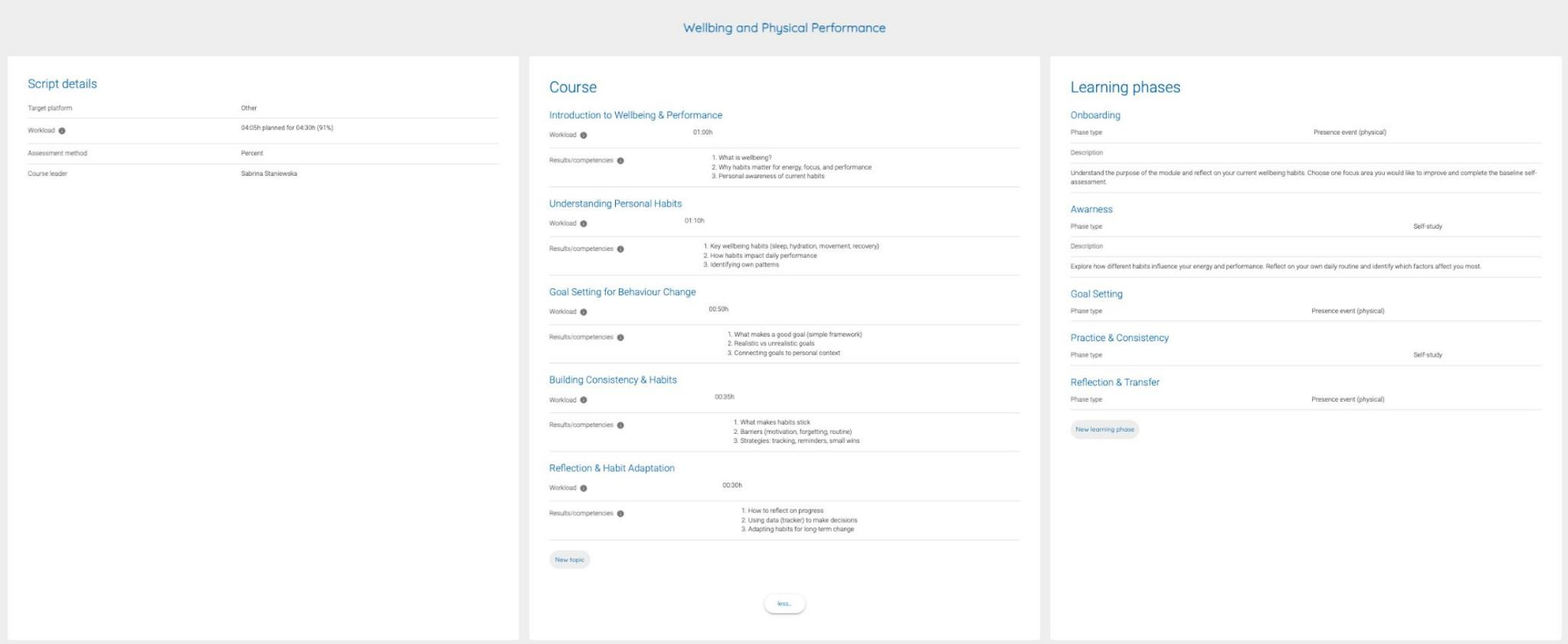
Storyline course overview — topics, workload, and learning outcomes per section
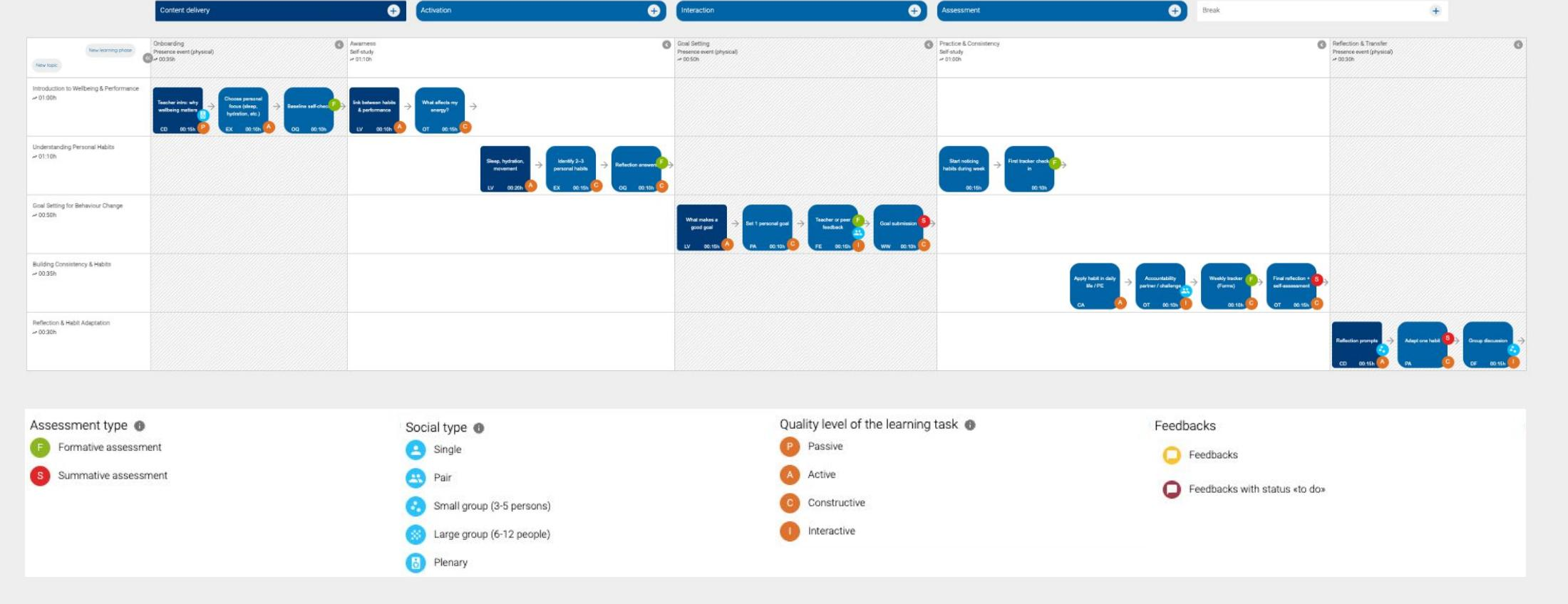
Storyline authoring board — content delivery, activation, interaction, and assessment mapped across five learning phases

These are planning and authoring views, not the student-facing screens — appropriate for a concept that's fully designed but not yet piloted with students.

Learner Personas — Amina and Leo
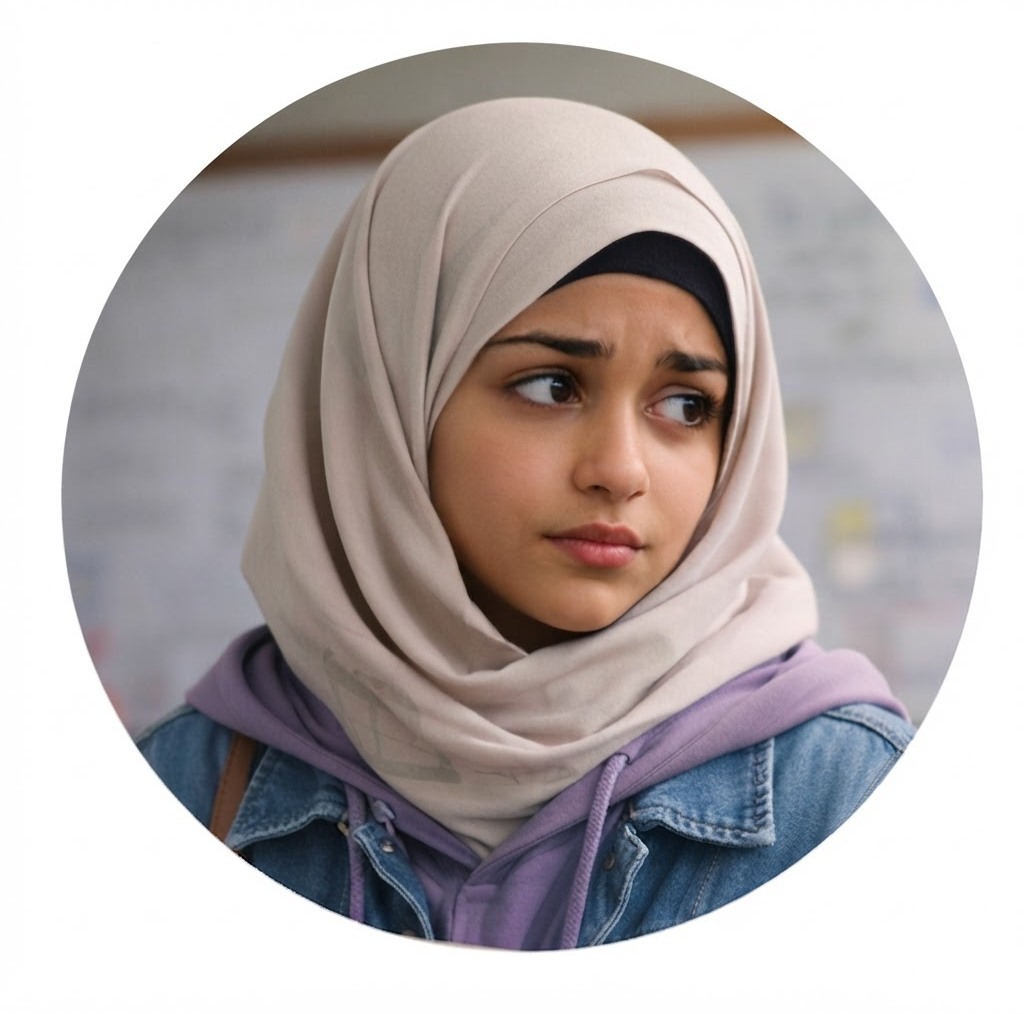
Amina

ESL secondary student, ages 14–16. Understands more than she's comfortable expressing, especially in open-ended or verbal tasks. Participates readily when expectations are clear; withdraws when they aren't, or when she can't see how success will be judged. She doesn't lack ability — she lacks clarity, language scaffolding, and a visible sense of her own progress. Design response: predictable routines, visual scaffolds, sentence starters for reflection, and progress made visible in small, legible steps.
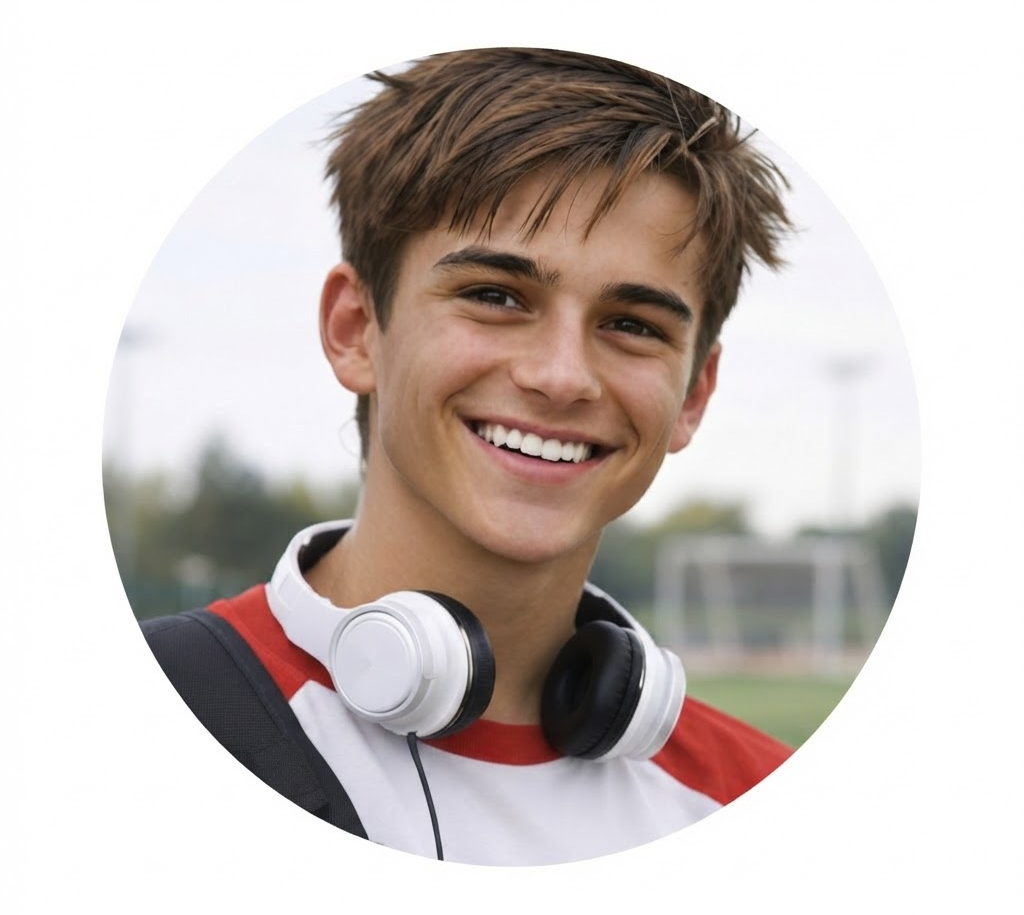
Leo

Sports-oriented secondary student, same age range. High energy, strong in practical tasks, enthusiastic at the start of anything new. His challenge isn't motivation in the moment — it's follow-through. Routines lose him once they stop feeling challenging or once progress stops being visible fast. Design response: stretch goals, streaks, dashboards, and self-competition — mechanisms that convert his energy into discipline rather than trying to manufacture motivation he already has.

Collaboration vs Self-Study

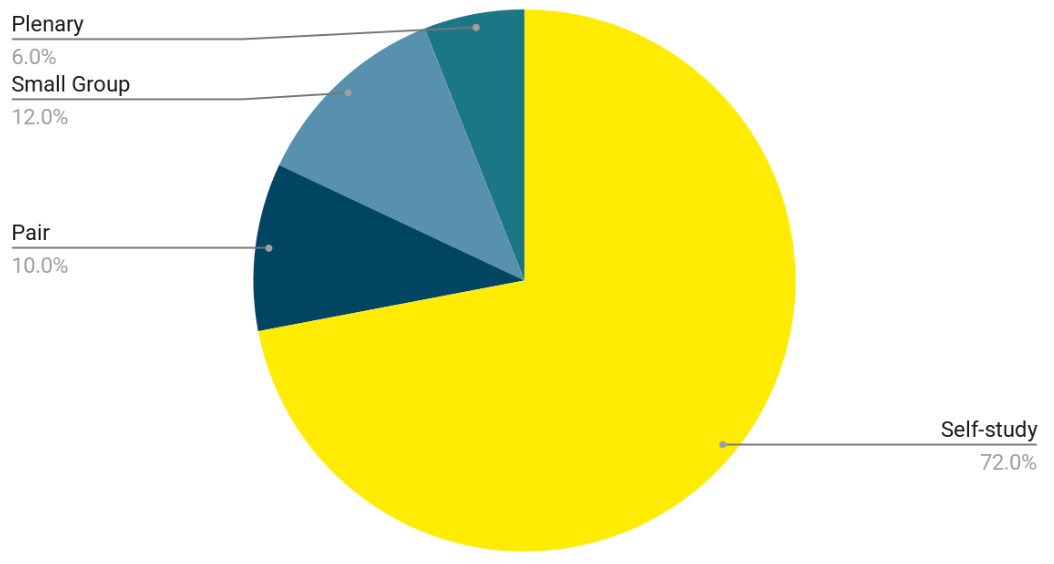
The learning design is primarily based on self-directed activities, allowing students to reflect, track, and apply habits independently. Targeted moments of peer interaction and group discussion are intentionally integrated to support motivation, accountability, and deeper reflection.

Interaction is used strategically, not constantly, to maximise impact without overloading learners.
Learning Objectives

By the end of the experience, learners can:

  • Identify 2–3 personal wellbeing habits that influence their focus, energy, and performance in school and sport
  • Set and implement one realistic wellbeing goal by Week 2, using a structured goal-setting framework
  • Track and interpret their own progress through weekly check-ins, reflection prompts, and performance indicators
  • Reflect on and adapt at least one habit by the final checkpoint, using their own progress data as evidence
Evidence of Learning / Success Metrics

The design specifies what evidence would confirm the ecosystem is working, not results from a live pilot. Planned evidence sources:

  • weekly habit-tracker data (streaks, completion trends),
  • Articulate quiz and reflection responses,
  • goal-setting worksheets,
  • before/after self-assessment,
  • and teacher observation of participation and self-management in PE.

Success would be measured on habit consistency, reflection completion, goal completion rate, sustained engagement across weeks rather than a strong start followed by drop-off, and evidence of transfer beyond the digital module into PE, sport, or home life.

4-Week Student Journey

Designed as a behaviour-change arc, not a content sequence: Awareness → Goal setting → Practice → Reflection.
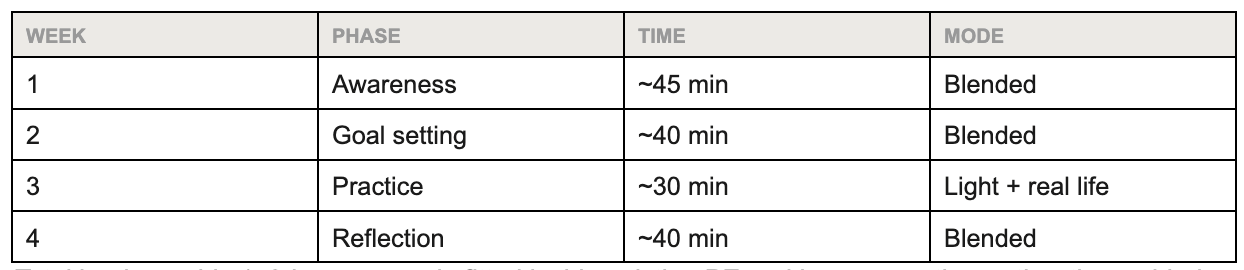
* Mode indicates how learning takes place: asynchronous (self-paced digital), synchronous (in-class or live), or blended (a combination of both).

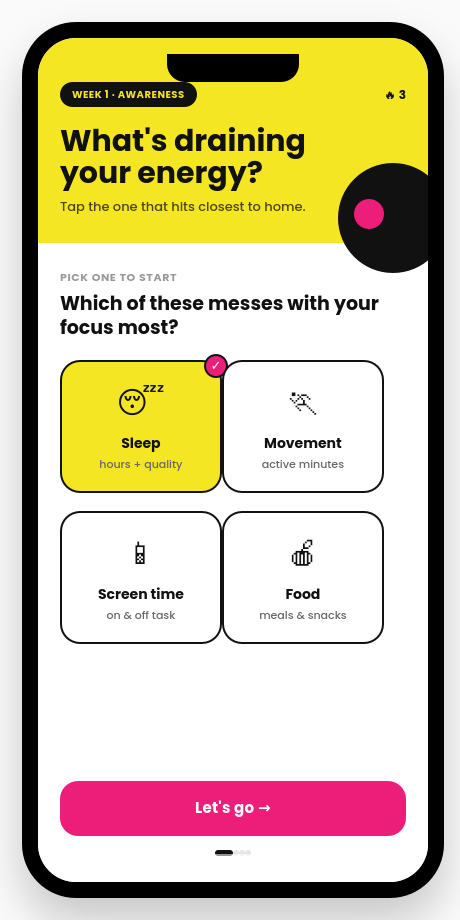
Mobile app Designs - Selected Screens
Conclusion: Takeaways

This wasn't a UX project wearing an education hat. The tools were different — Storyline instead of Figma, a classroom instead of a usability lab — but the discipline was identical: observe real behaviour before designing for it, and build for the people who actually show up rather than an average of them. It's a design proposal, not a retrospective — the next step is piloting it against exactly the kind of evidence the plan itself defines.

Let's talk about what that could look like at your organisation. Contact me →

Case Study Student Wellbeing

From Participation to Ownership - A year in the classroom, one design proposal: a blended learning ecosystem

Product detail
  • What

    Concept & Strategy Program

  • Role

    Learning Experience Designer

  • Target Group

    Secondary Students

  • Sector

    Transport

Strategic Impact

A year of classroom teaching surfaced a pattern usability research would recognise instantly: students who participate but don't own their learning. I designed a blended ecosystem — not a course — to move them from participation to ownership over a structured 4-week behaviour-change journey.

  • About SPARK

    SPARK is a concept for a blended wellbeing and performance learning experience for secondary students — designed, not yet piloted. It grew out of a year of classroom teaching, where the gap I kept seeing wasn't ability, it was ownership: students who showed up to lessons without ever building the habits, language, or reflection skills to track their own progress.

  • Observed Problem

    In the classroom, the students who struggled weren't the ones lacking ability — they were the ones lacking consistency and motivation. This showed up most clearly in mixed-ability and ESL settings, where disengagement tracked not to difficulty but to unclear purpose: students who couldn't see how an activity connected to their own progress switched off. The gap wasn't participation. It was ownership — students took part in lessons without the tools, language, or structure to reflect on their learning, track progress, or build habits that outlasted the lesson.

    Designing for Behaviour, Not Just Content

    To support long-term wellbeing and student ownership, I designed a blended learning ecosystem — not just a standalone

    digital module:

    • Articulate 360 (Storyline) — short microlearning and reflection moments that introduce concepts and build self-awareness
    • Weekly check-ins (Google Forms) — low-friction habit tracking that builds consistency and ownership
    • In-class practice (PE / homeroom) — real-world application through movement and collaboration; this is what makes the digital layer mean anything
    • Optional nudges — light-touch reminders that keep the learning present outside the classroom

    The four feed an evidence loop: reflection from one week shapes the next. Learning fails when people forget — the nudge layer exists specifically to counter that, not to add another channel for its own sake.

Course Structure — Built in Storyline

The module structure below was designed and mapped directly in Articulate Storyline — these are real screenshots of that planning work, not illustrative mockups. The left view shows the course-level breakdown (topics, workload per topic, and learning outcomes); the right shows the phase-by-phase authoring board — content delivery, activation, interaction, and assessment blocks sequenced across the five learning phases, each tagged by assessment type, social format, and task quality.

Storyline course overview — topics, workload, and learning outcomes per section

Storyline authoring board — content delivery, activation, interaction, and assessment mapped across five learning phases

These are planning and authoring views, not the student-facing screens — appropriate for a concept that's fully designed but not yet piloted with students.

Learner Personas — Amina and Leo

Amina

ESL secondary student, ages 14–16. Understands more than she's comfortable expressing, especially in open-ended or verbal tasks. Participates readily when expectations are clear; withdraws when they aren't, or when she can't see how success will be judged. She doesn't lack ability — she lacks clarity, language scaffolding, and a visible sense of her own progress. Design response: predictable routines, visual scaffolds, sentence starters for reflection, and progress made visible in small, legible steps.

Leo

Sports-oriented secondary student, same age range. High energy, strong in practical tasks, enthusiastic at the start of anything new. His challenge isn't motivation in the moment — it's follow-through. Routines lose him once they stop feeling challenging or once progress stops being visible fast. Design response: stretch goals, streaks, dashboards, and self-competition — mechanisms that convert his energy into discipline rather than trying to manufacture motivation he already has.

Collaboration vs Self-Study

The learning design is primarily based on self-directed activities, allowing students to reflect, track, and apply habits independently. Targeted moments of peer interaction and group discussion are intentionally integrated to support motivation, accountability, and deeper reflection.

Interaction is used strategically, not constantly, to maximise impact without overloading learners.

Learning Objectives

By the end of the experience, learners can:

  • Identify 2–3 personal wellbeing habits that influence their focus, energy, and performance in school and sport
  • Set and implement one realistic wellbeing goal by Week 2, using a structured goal-setting framework
  • Track and interpret their own progress through weekly check-ins, reflection prompts, and performance indicators
  • Reflect on and adapt at least one habit by the final checkpoint, using their own progress data as evidence
Evidence of Learning / Success Metrics

The design specifies what evidence would confirm the ecosystem is working, not results from a live pilot. Planned evidence sources:

  • weekly habit-tracker data (streaks, completion trends),
  • Articulate quiz and reflection responses,
  • goal-setting worksheets,
  • before/after self-assessment,
  • and teacher observation of participation and self-management in PE.

Success would be measured on habit consistency, reflection completion, goal completion rate, sustained engagement across weeks rather than a strong start followed by drop-off, and evidence of transfer beyond the digital module into PE, sport, or home life.

4-Week Student Journey

Designed as a behaviour-change arc, not a content sequence: Awareness → Goal setting → Practice → Reflection.

* Mode indicates how learning takes place: asynchronous (self-paced digital), synchronous (in-class or live), or blended (a combination of both).

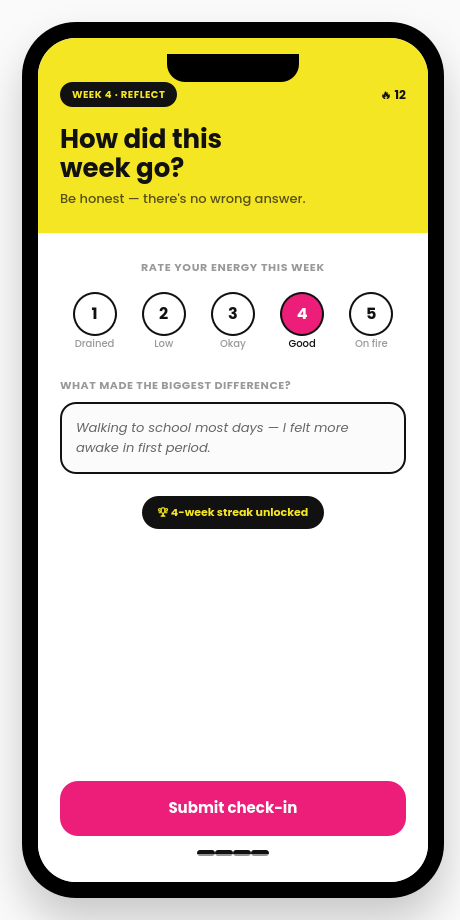
Mobile app Designs - Selected Screens
Conclusion: Takeaways

This wasn't a UX project wearing an education hat. The tools were different — Storyline instead of Figma, a classroom instead of a usability lab — but the discipline was identical: observe real behaviour before designing for it, and build for the people who actually show up rather than an average of them. It's a design proposal, not a retrospective — the next step is piloting it against exactly the kind of evidence the plan itself defines.

Let's talk about what that could look like at your organisation. Contact me →

Case Study Student Wellbeing

From Participation to Ownership - A year in the classroom, one design proposal: a blended learning ecosystem

Product detail
  • What

    Concept & Strategy Program

  • Role

    Learning Experience Designer

  • Target Group

    Secondary Students

  • Sector

    Transport

Strategic Impact

A year of classroom teaching surfaced a pattern usability research would recognise instantly: students who participate but don't own their learning. I designed a blended ecosystem — not a course — to move them from participation to ownership over a structured 4-week behaviour-change journey.

  • About SPARK

    SPARK is a concept for a blended wellbeing and performance learning experience for secondary students — designed, not yet piloted. It grew out of a year of classroom teaching, where the gap I kept seeing wasn't ability, it was ownership: students who showed up to lessons without ever building the habits, language, or reflection skills to track their own progress.

  • Observed Problem

    In the classroom, the students who struggled weren't the ones lacking ability — they were the ones lacking consistency and motivation. This showed up most clearly in mixed-ability and ESL settings, where disengagement tracked not to difficulty but to unclear purpose: students who couldn't see how an activity connected to their own progress switched off. The gap wasn't participation. It was ownership — students took part in lessons without the tools, language, or structure to reflect on their learning, track progress, or build habits that outlasted the lesson.

    Designing for Behaviour, Not Just Content

    To support long-term wellbeing and student ownership, I designed a blended learning ecosystem — not just a standalone

    digital module:

    • Articulate 360 (Storyline) — short microlearning and reflection moments that introduce concepts and build self-awareness
    • Weekly check-ins (Google Forms) — low-friction habit tracking that builds consistency and ownership
    • In-class practice (PE / homeroom) — real-world application through movement and collaboration; this is what makes the digital layer mean anything
    • Optional nudges — light-touch reminders that keep the learning present outside the classroom

    The four feed an evidence loop: reflection from one week shapes the next. Learning fails when people forget — the nudge layer exists specifically to counter that, not to add another channel for its own sake.

Course Structure — Built in Storyline

The module structure below was designed and mapped directly in Articulate Storyline — these are real screenshots of that planning work, not illustrative mockups. The left view shows the course-level breakdown (topics, workload per topic, and learning outcomes); the right shows the phase-by-phase authoring board — content delivery, activation, interaction, and assessment blocks sequenced across the five learning phases, each tagged by assessment type, social format, and task quality.

Storyline course overview — topics, workload, and learning outcomes per section

Storyline authoring board — content delivery, activation, interaction, and assessment mapped across five learning phases

These are planning and authoring views, not the student-facing screens — appropriate for a concept that's fully designed but not yet piloted with students.

Learner Personas — Amina and Leo

Amina

ESL secondary student, ages 14–16. Understands more than she's comfortable expressing, especially in open-ended or verbal tasks. Participates readily when expectations are clear; withdraws when they aren't, or when she can't see how success will be judged. She doesn't lack ability — she lacks clarity, language scaffolding, and a visible sense of her own progress. Design response: predictable routines, visual scaffolds, sentence starters for reflection, and progress made visible in small, legible steps.

Leo

Sports-oriented secondary student, same age range. High energy, strong in practical tasks, enthusiastic at the start of anything new. His challenge isn't motivation in the moment — it's follow-through. Routines lose him once they stop feeling challenging or once progress stops being visible fast. Design response: stretch goals, streaks, dashboards, and self-competition — mechanisms that convert his energy into discipline rather than trying to manufacture motivation he already has.

Collaboration vs Self-Study

The learning design is primarily based on self-directed activities, allowing students to reflect, track, and apply habits independently. Targeted moments of peer interaction and group discussion are intentionally integrated to support motivation, accountability, and deeper reflection.

Interaction is used strategically, not constantly, to maximise impact without overloading learners.

Learning Objectives

By the end of the experience, learners can:

  • Identify 2–3 personal wellbeing habits that influence their focus, energy, and performance in school and sport
  • Set and implement one realistic wellbeing goal by Week 2, using a structured goal-setting framework
  • Track and interpret their own progress through weekly check-ins, reflection prompts, and performance indicators
  • Reflect on and adapt at least one habit by the final checkpoint, using their own progress data as evidence
Evidence of Learning / Success Metrics

The design specifies what evidence would confirm the ecosystem is working, not results from a live pilot. Planned evidence sources:

  • weekly habit-tracker data (streaks, completion trends),
  • Articulate quiz and reflection responses,
  • goal-setting worksheets,
  • before/after self-assessment,
  • and teacher observation of participation and self-management in PE.

Success would be measured on habit consistency, reflection completion, goal completion rate, sustained engagement across weeks rather than a strong start followed by drop-off, and evidence of transfer beyond the digital module into PE, sport, or home life.

4-Week Student Journey

Designed as a behaviour-change arc, not a content sequence: Awareness → Goal setting → Practice → Reflection.

* Mode indicates how learning takes place: asynchronous (self-paced digital), synchronous (in-class or live), or blended (a combination of both).

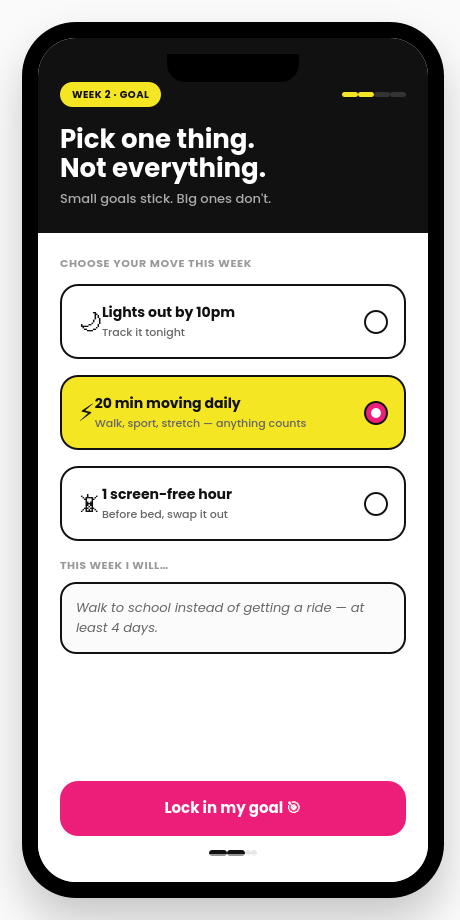
Mobile app Designs - Selected Screens
Conclusion: Takeaways

This wasn't a UX project wearing an education hat. The tools were different — Storyline instead of Figma, a classroom instead of a usability lab — but the discipline was identical: observe real behaviour before designing for it, and build for the people who actually show up rather than an average of them. It's a design proposal, not a retrospective — the next step is piloting it against exactly the kind of evidence the plan itself defines.

Let's talk about what that could look like at your organisation. Contact me →