Innovation & Leadership

Research & Development

Community & Coaching

Case Study Squla

Where grade level stopped predicting difficulty
Product detail
  • Role

    Lead Researcher & Experience Designer

    Devices

    Android tablet & smartphone, PC

    Participants

    12 children, grades 1–4

    Sector

    EdTech / children's education

Strategic Impact

Research with children on their own Android devices uncovered two launch-blocking issues: critical bugs making the platform non-functional for the majority of the target audience, and a foundational content assumption — that grade level equals difficulty — directly contradicted by observation.

  • About Squla

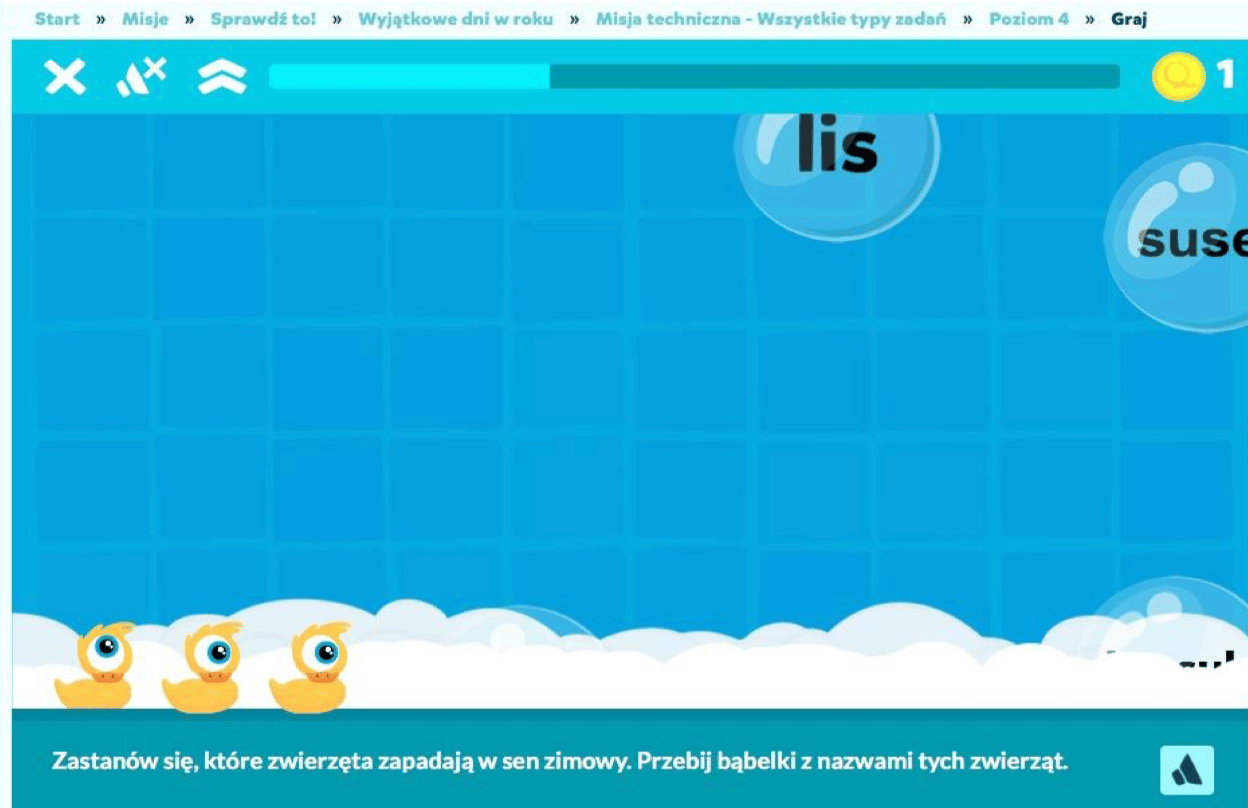
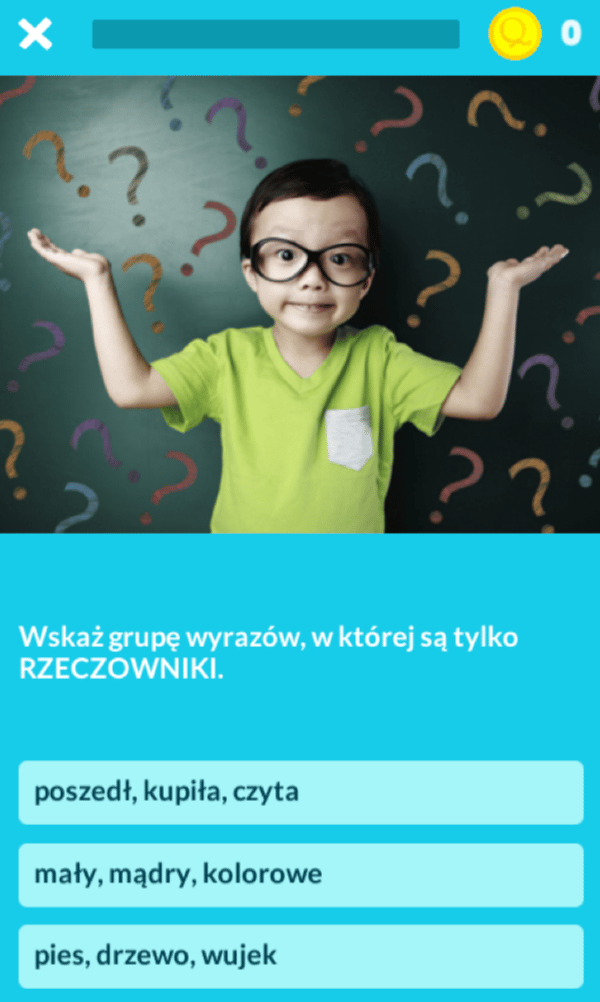
    Squla is a Dutch-origin online learning platform for primary school children, covering Polish, maths, and science through gamified missions and question types. Children progress through mission levels, earning points and unlocking content as they go — designed to make independent practice feel like play rather than schoolwork.

  • Research Set Up

    12 children, grades 1 through 4, 6 girls and 6 boys — all non-users of the Squla platform. Each child completed a series of tasks individually, on the device of their choice: their own Android tablet, Android smartphone, or a PC. Sessions were moderated with an observer present throughout, covering all question types across five mission levels in Polish, maths, and science. Research conducted with Agnieszka Rzeźnik.

    Critical Methodological Decisions

    Participants brought their own Android devices — not clean test hardware. This was the decision that made the research valuable. Two question types were completely broken on Android, one of them blocking progression entirely. Caught before launch; would have been silent retention damage after.

Key Findings

Children of the same age and grade showed significantly different levels of reading, writing, and maths ability. A foundational product assumption challenged by direct observation — with implications beyond the Polish launch.

  • LAUNCH BLOCKER - Coloring question broke navigation on mobile

    On Android, the coloring question displayed incorrectly and gave no way to proceed to the next question. Not just an incomplete task — a dead end in the flow.

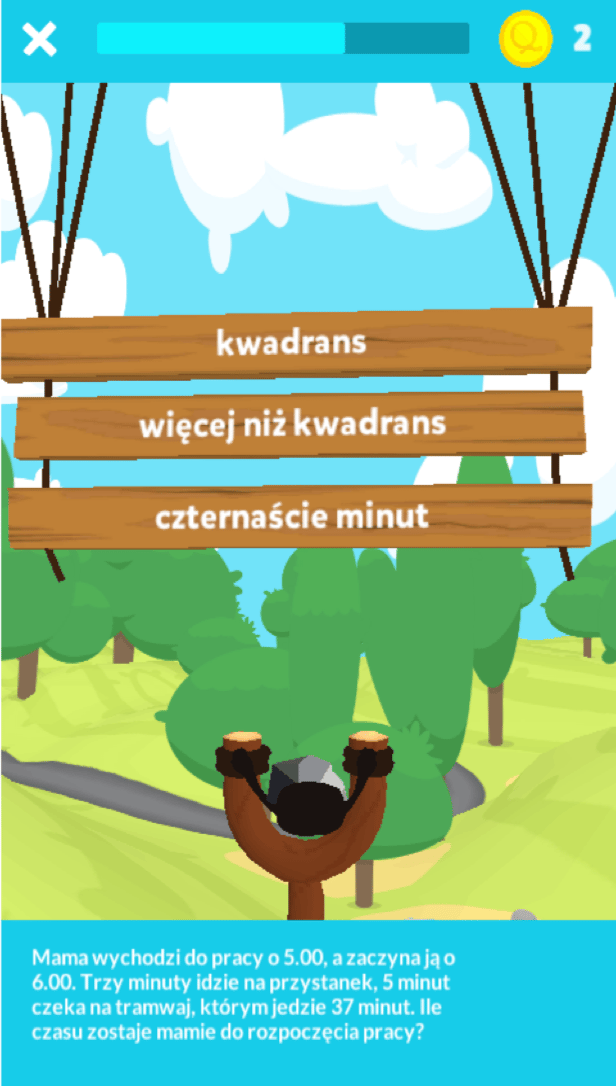
  • MUST FIX - Slingshot interaction failed for every age group on first contact

    No child knew what to do without prompting. Instruction language caused systematic misinterpretation, and aiming was especially difficult on mobile.

  • WORKED WELL - Puzzle questions were universally well received

    Children began solving immediately, often without reading the instructions at all.

  • LAUNCH BLOCKER - Drag-and-drop showed pre-filled answers on mobile

    One question displayed the correct answer already in place, leaving only two incorrect options to choose from. A technical defect, not a usability issue.

  • MUST FIX - Negation in instructions caused systematic wrong answers

    Questions containing “NIE” (not) led children to select incorrect answers even when they knew the right one — they read past the negation.

  • WORKED WELL - Mascot created genuine emotional engagement

    Children clicked on “Squlka” expecting it to react — blink, move, respond — even though no interaction was designed.

Conclusion: Takeaways

Testing on children's own Android devices — not clean lab hardware — is what surfaced two launch-blocking bugs before release. It also surfaced something more strategic: children at the same grade level showed meaningfully different reading, writing, and maths ability, challenging a core content assumption. One finding was a fix. The other was a reason to rethink how difficulty gets defined.

Let's talk about what that could look like at your organisation. Contact me →

Case Study Squla

Where grade level stopped predicting difficulty.

Product detail
  • Role

    Lead Researcher & Experience Designer

    Devices

    Android tablet & smartphone, PC

    Participants

    12 children, grades 1–4

    Sector

    EdTech / children's education

Strategic Impact

Research with children on their own Android devices uncovered two launch-blocking issues: critical bugs making the platform non-functional for the majority of the target audience, and a foundational content assumption — that grade level equals difficulty — directly contradicted by observation.

  • About Squla

    Squla is a Dutch-origin online learning platform for primary school children, covering Polish, maths, and science through gamified missions and question types. Children progress through mission levels, earning points and unlocking content as they go — designed to make independent practice feel like play rather than schoolwork.

  • Research Set Up

    12 children, grades 1 through 4, 6 girls and 6 boys — all non-users of the Squla platform. Each child completed a series of tasks individually, on the device of their choice: their own Android tablet, Android smartphone, or a PC. Sessions were moderated with an observer present throughout, covering all question types across five mission levels in Polish, maths, and science. Research conducted with Agnieszka Rzeźnik.

    Critical Methodological Decisions

    Participants brought their own Android devices — not clean test hardware. This was the decision that made the research valuable. Two question types were completely broken on Android, one of them blocking progression entirely. Caught before launch; would have been silent retention damage after.
Key Findings

Children of the same age and grade showed significantly different levels of reading, writing, and maths ability. A foundational product assumption challenged by direct observation — with implications beyond the Polish launch.

  • LAUNCH BLOCKER - Coloring question broke navigation on mobile

    On Android, the coloring question displayed incorrectly and gave no way to proceed to the next question. Not just an incomplete task — a dead end in the flow.

  • MUST FIX - Slingshot interaction failed for every age group on first contact

    No child knew what to do without prompting. Instruction language caused systematic misinterpretation, and aiming was especially difficult on mobile.

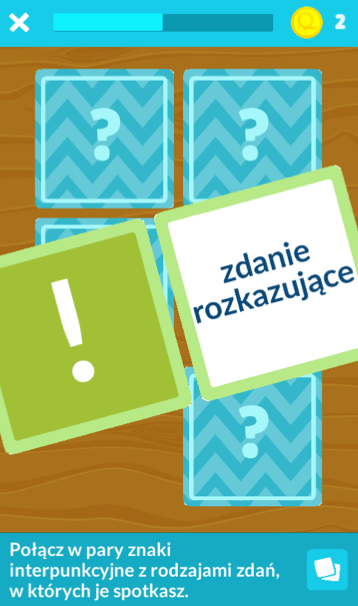
  • WORKED WELL - Puzzle questions were universally well received

    Children began solving immediately, often without reading the instructions at all.

  • LAUNCH BLOCKER - Drag-and-drop showed pre-filled answers on mobile

    One question displayed the correct answer already in place, leaving only two incorrect options to choose from. A technical defect, not a usability issue.

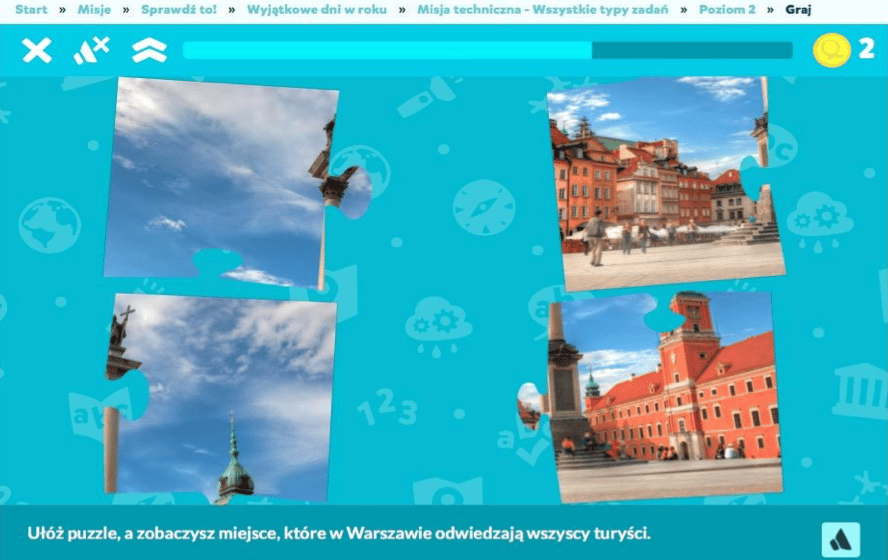
  • MUST FIX - Negation in instructions caused systematic wrong answers

    Questions containing “NIE” (not) led children to select incorrect answers even when they knew the right one — they read past the negation.

  • WORKED WELL - Mascot created genuine emotional engagement

    Children clicked on “Squlka” expecting it to react — blink, move, respond — even though no interaction was designed.
Conclusion: Takeaways

Testing on children's own Android devices — not clean lab hardware — is what surfaced two launch-blocking bugs before release. It also surfaced something more strategic: children at the same grade level showed meaningfully different reading, writing, and maths ability, challenging a core content assumption. One finding was a fix. The other was a reason to rethink how difficulty gets defined.

Let's talk about what that could look like at your organisation. Contact me →
Case Study Squla

Where grade level stopped predicting difficulty

Product detail
  • Role

    Lead Researcher & Experience Designer

    Devices

    Android tablet & smartphone, PC

    Participants

    12 children, grades 1–4

    Sector

    EdTech / children's education

Strategic Impact

Research with children on their own Android devices uncovered two launch-blocking issues: critical bugs making the platform non-functional for the majority of the target audience, and a foundational content assumption — that grade level equals difficulty — directly contradicted by observation.

  • About Squla

    Squla is a Dutch-origin online learning platform for primary school children, covering Polish, maths, and science through gamified missions and question types. Children progress through mission levels, earning points and unlocking content as they go — designed to make independent practice feel like play rather than schoolwork.

  • Research Set Up

    12 children, grades 1 through 4, 6 girls and 6 boys — all non-users of the Squla platform. Each child completed a series of tasks individually, on the device of their choice: their own Android tablet, Android smartphone, or a PC. Sessions were moderated with an observer present throughout, covering all question types across five mission levels in Polish, maths, and science. Research conducted with Agnieszka Rzeźnik.

    Critical Methodological Decisions

    Participants brought their own Android devices — not clean test hardware. This was the decision that made the research valuable. Two question types were completely broken on Android, one of them blocking progression entirely. Caught before launch; would have been silent retention damage after.

Key Findings

Children of the same age and grade showed significantly different levels of reading, writing, and maths ability. A foundational product assumption challenged by direct observation — with implications beyond the Polish launch.

  • LAUNCH BLOCKER - Coloring question broke navigation on mobile

    On Android, the coloring question displayed incorrectly and gave no way to proceed to the next question. Not just an incomplete task — a dead end in the flow.

  • MUST FIX - Slingshot interaction failed for every age group on first contact

    No child knew what to do without prompting. Instruction language caused systematic misinterpretation, and aiming was especially difficult on mobile.

  • WORKED WELL - Puzzle questions were universally well received

    Children began solving immediately, often without reading the instructions at all.

  • LAUNCH BLOCKER - Drag-and-drop showed pre-filled answers on mobile

    One question displayed the correct answer already in place, leaving only two incorrect options to choose from. A technical defect, not a usability issue.

  • MUST FIX - Negation in instructions caused systematic wrong answers

    Questions containing “NIE” (not) led children to select incorrect answers even when they knew the right one — they read past the negation.

  • WORKED WELL - Mascot created genuine emotional engagement

    Children clicked on “Squlka” expecting it to react — blink, move, respond — even though no interaction was designed.

Conclusion: Takeaways

Testing on children's own Android devices — not clean lab hardware — is what surfaced two launch-blocking bugs before release. It also surfaced something more strategic: children at the same grade level showed meaningfully different reading, writing, and maths ability, challenging a core content assumption. One finding was a fix. The other was a reason to rethink how difficulty gets defined.

Let's talk about what that could look like at your organisation. Contact me →